Livingston, New Jersey - Tap Water Quality
Prefer to watch? See the video version
Watch our comprehensive video analysis of Livingston's water quality instead of reading the full report.
▶Watch Full Video on YouTube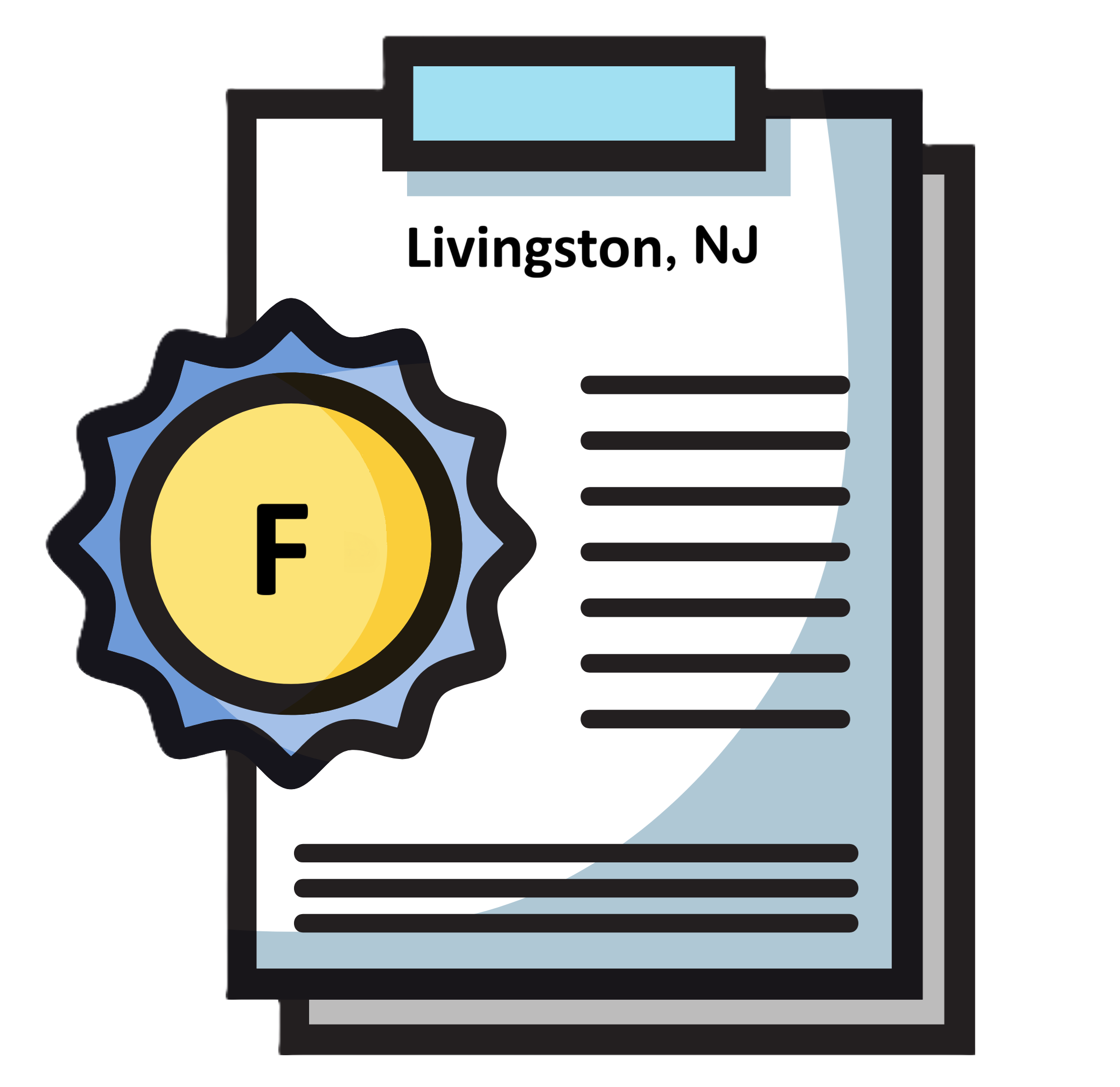
The Verdict: F
After careful review, Livingston, New Jersey's tap water quality received an F, or Poor rating on the Town Water Check index, which ranges from A to F.
Disclaimer: The Town Water Check grading system is our opinion, based on measured contaminant levels as well as the known effects on long-term human health. Others may reach a different conclusion. This report was published in 2025 and is primarily based on 2024 data. For the most current information, please consult your water provider or municipality.
Remember, we are grading the current state of the water itself, not the water supplier. Since the results may be surprising, we'll explain our grading system and what led us to this conclusion. Finally, we'll take a look at how neighboring communities' tap water stacks up to Livingston's.
Summary
Livingston is a township in northern New Jersey, in Essex County, which sources its water from fourteen wells in the Buried Valley Aquifer System, the Brunswick Shale, and the Canoe Brook reservoirs, as well as water purchased from other systems. The 2025 CCR (Consumer Confidence Report) highlights a significant violation for PFOA—a type of PFAS (“forever chemical”)—which was detected at a maximum of 27.6 parts per trillion. This is over six times the future federal EPA limit of 4.0 parts per trillion and exceeds the current state limit of 14 parts per trillion. PFOS, another type of PFAS (forever chemical), was detected at 6.8 parts per trillion. To address these levels, a treatment upgrade contract has been awarded and construction is underway. Additionally, the system noted a sampling violation for Volatile Organic Compounds due to a mechanical pump failure.
The Good News
But let's share some good news. All levels of biological and radiological contaminants, pesticides and left-over disinfecting products were either undetectable or well within EPA limits.
Without water, life is not possible. It's needed for transporting and dissolving nutrients, maintaining body temperature as well as our very shape. In fact, humans are about 60% water.
Heavy Metals: The Invisible Threat
Among the most common and concerning contaminants in tap water are a group known as 'heavy metals', including Lead, Arsenic, Chromium, Mercury and Cadmium. So harmful are these toxic substances to human health that the EPA limits their presence in tap water to between two and one hundred parts per billion, the equivalent of one drop in a large hot tub.
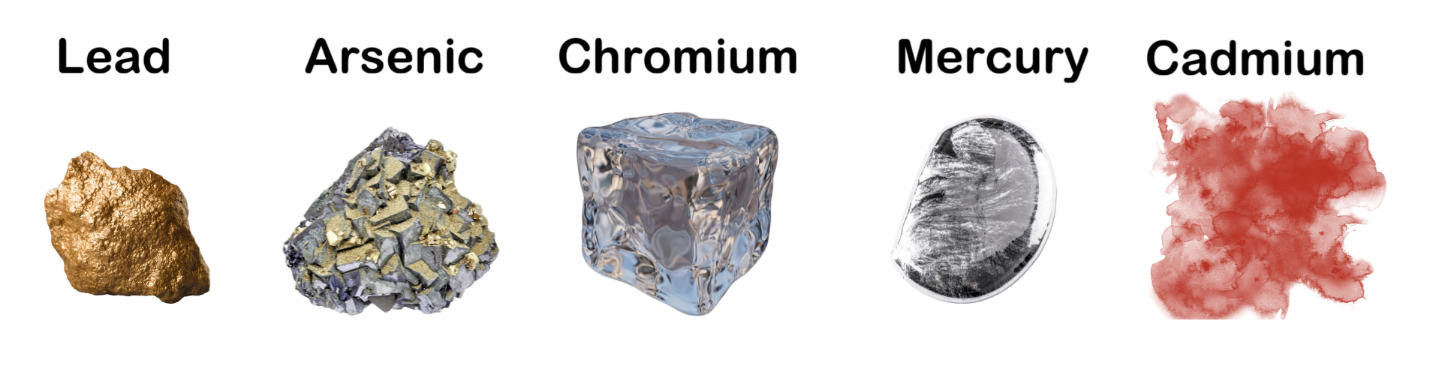
Visual representations of five heavy metals
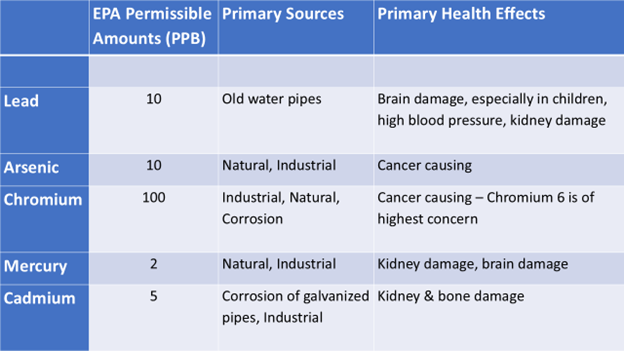
EPA limits and health effects of heavy metals
Livingston's Heavy Metal Levels
So in Livingston, although neither mercury nor cadmium were detected, low levels of lead, arsenic and chromium, at 43%, 13% and 1.6% of the EPA maximum respectively were present, but all within EPA limits.
However, the ultimate goal for both lead and arsenic is to be so low as to be undetectable.

Other Contaminants
On a more positive note, no other significant issues were detected in Livingston tap water. Various other contaminants including disinfection byproducts (TTHM and HAA5), nitrate, and radiological contaminants (Gross Alpha, Radium, Uranium) were all detected at levels within EPA limits.
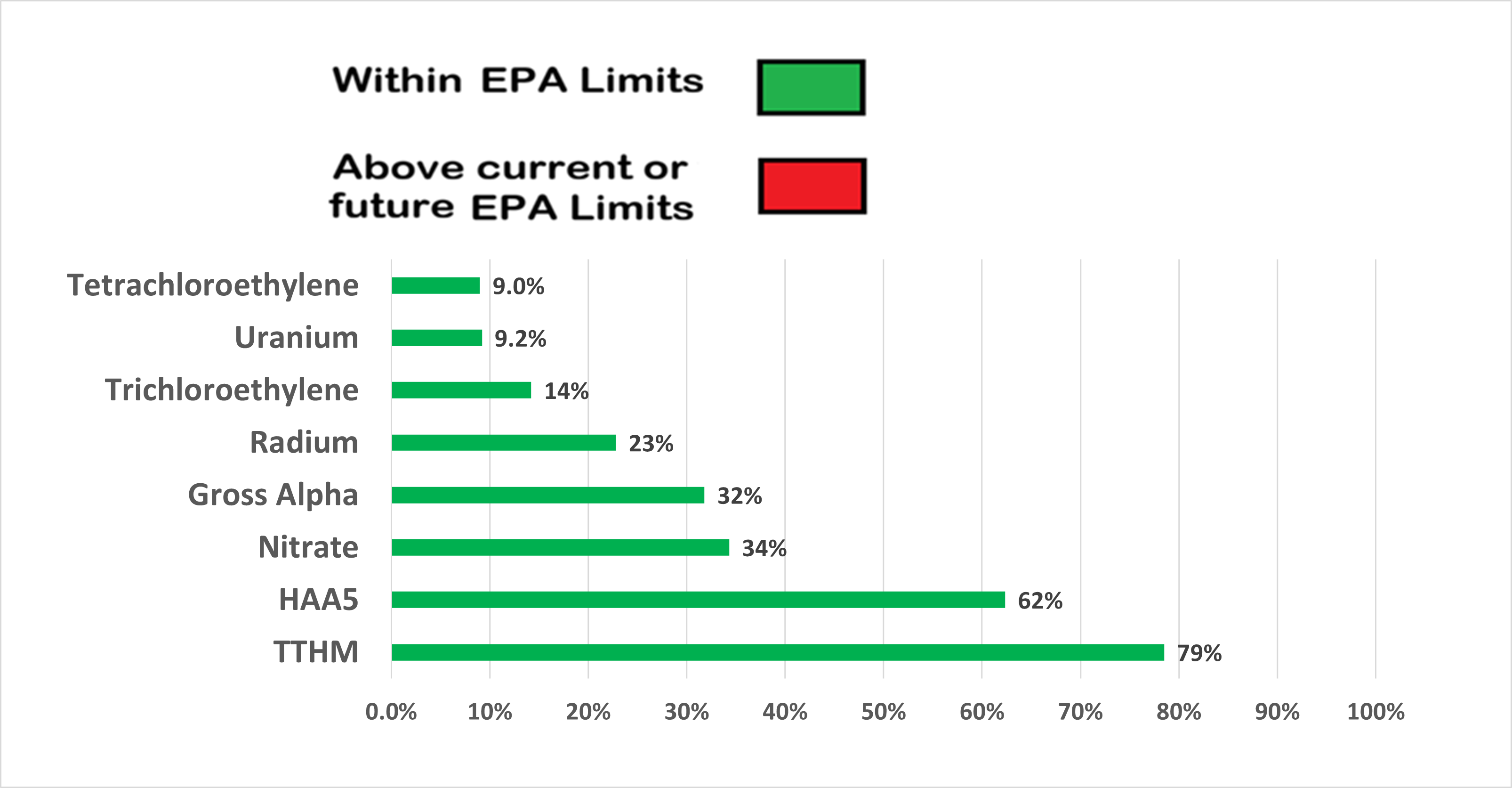
All other tested contaminants were within EPA limits
PFAS: The Forever Chemicals
Not to be outdone by nature, man himself has created nearly indestructible “Forever Chemicals” or PFAS (Per- and Polyfluoroalkyl Substances). In the 1930s, chemists had the “bright idea” of bonding Carbon, the element of life, to Fluorine, among the most reactive of elements. Non-stick pans, water-resistant clothing, industrial fire retardant, were the result. But, was it worth the terrible consequences associated with long-term exposure, such as increased cancer rates, reduced response to vaccines, elevated cholesterol levels, endocrine disruption, and reproductive and developmental issues?

In 2024, the EPA set an almost unimaginably low tap water limit of 4 parts per trillion (ppt), for certain PFAS compounds—the equivalent of one drop in five Olympic-sized swimming pools. It had only become clear to the general public, about a decade earlier, how toxic these chemicals were, at miniscule, trace amounts. But manufacturers had some idea, as early as the 1950s, as evidenced by corporate documents.
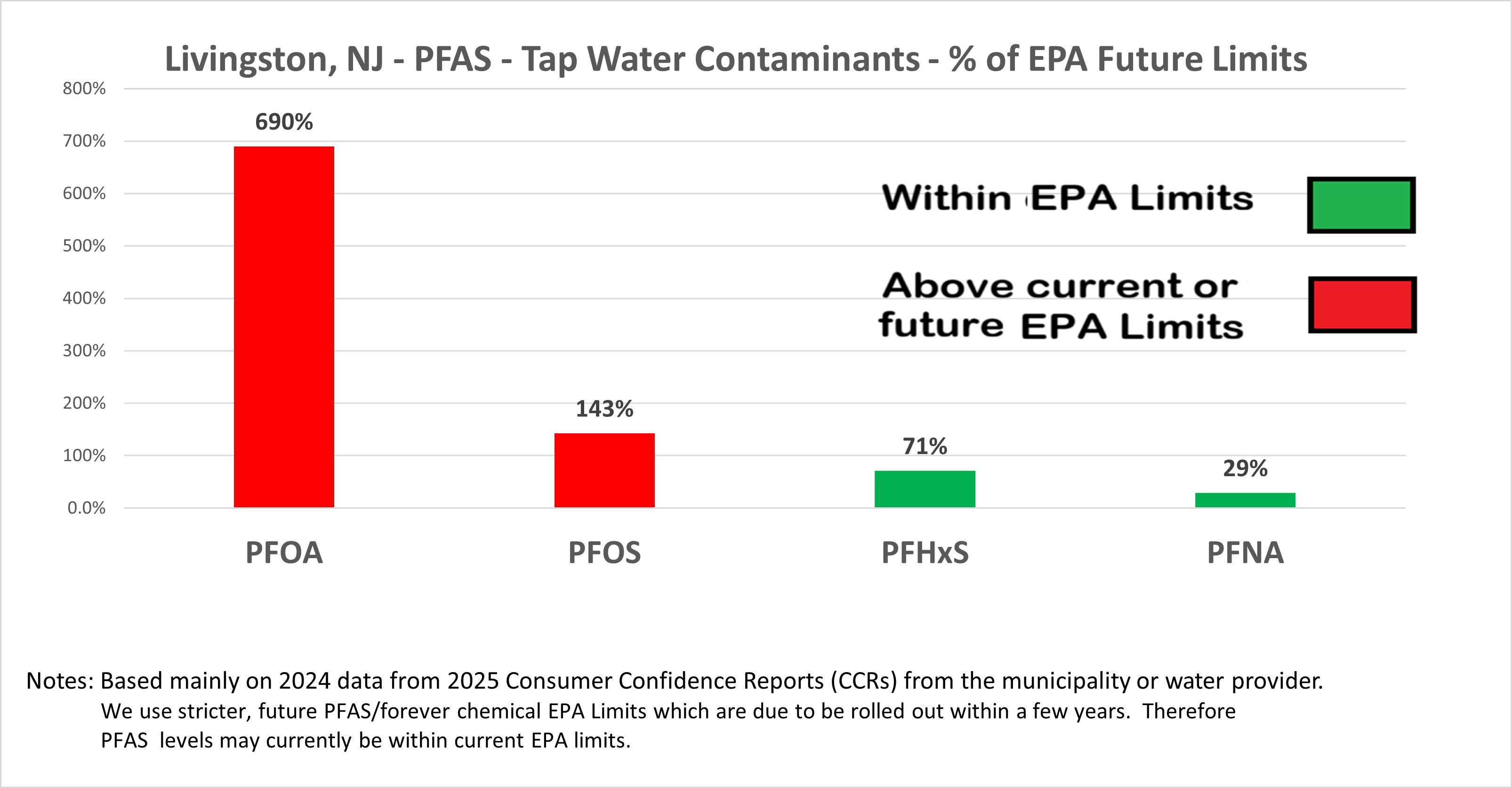
PFAS levels in Livingston's water - PFOA at 690% is particularly concerning
The Livingston Tap Water Dilemma, 100,000+ Years In The Making
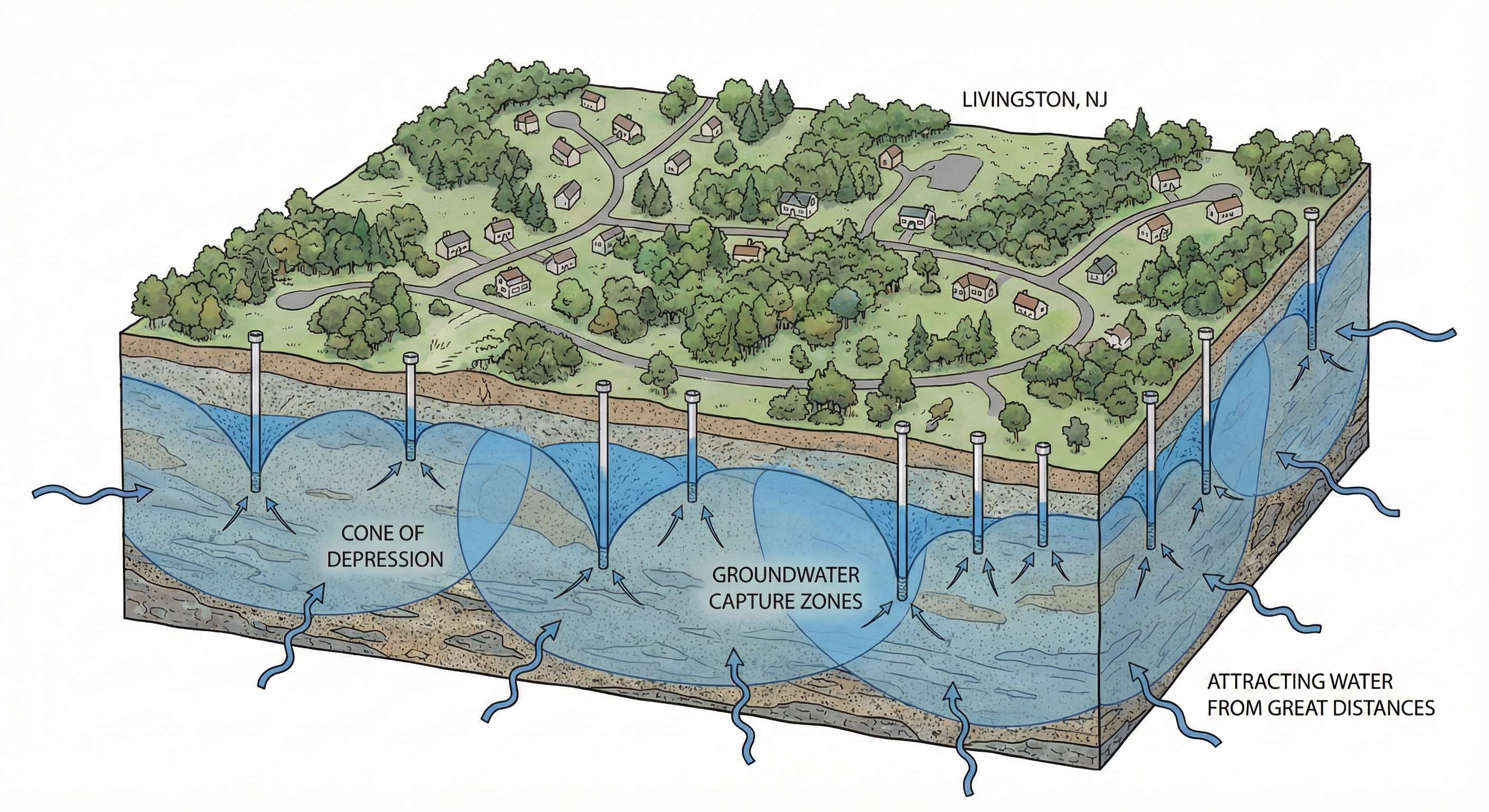
Livingston's tap water issues are actually well over 100,000 years in the making, long before even the Passaic River was carved. Livingston sits over an ancient buried valley, originally carved into the bedrock by the titanic forces of ancient rivers and much later, glaciers that towered over 1,000 feet. As the earth exited the last ice age, between 18,000 and 12,000 years ago, the glaciers retreated and left in their wake, relatively soft sand, gravel, and clay (glacial drift) that filled the deep bedrock canyon, burying the valley below.
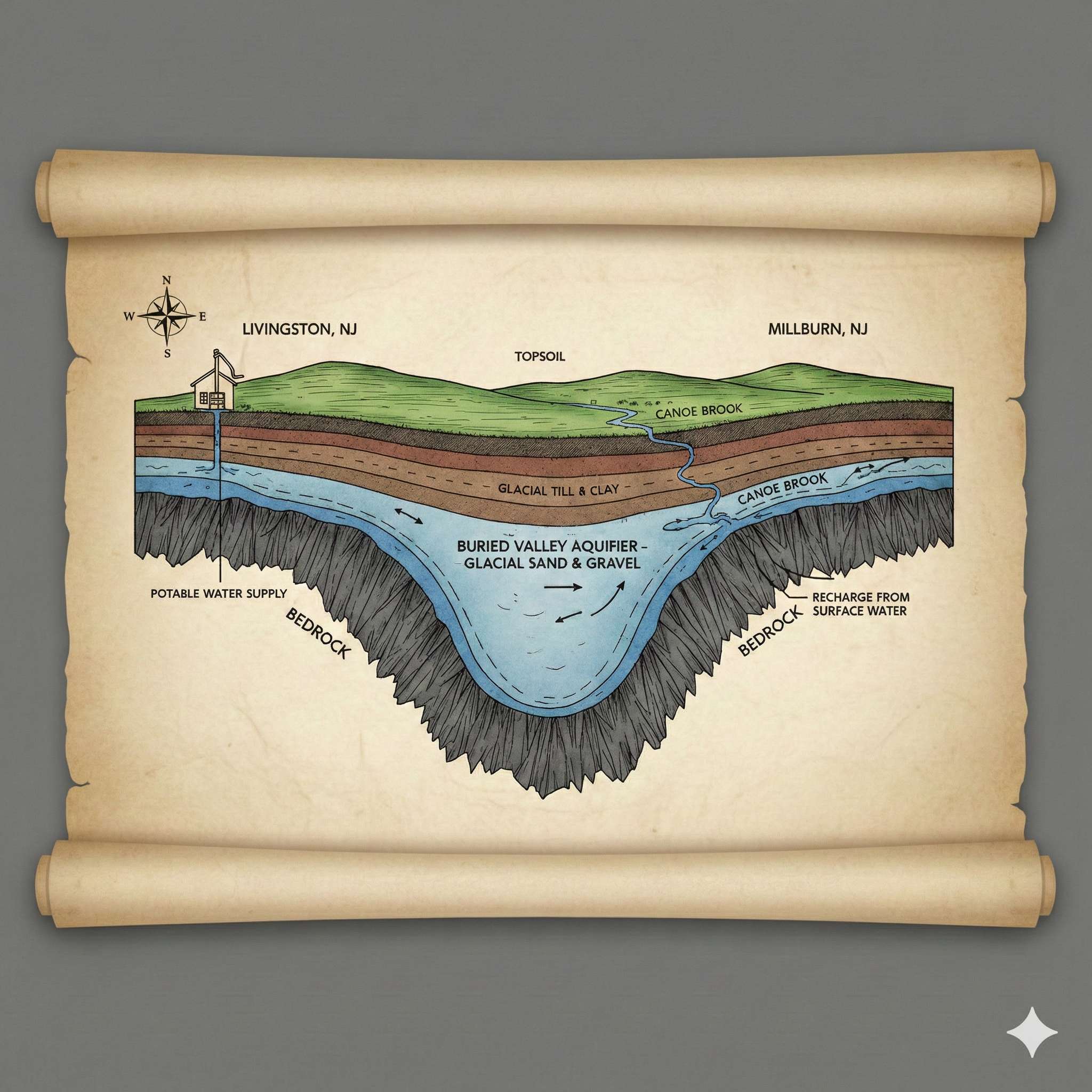
Cross-section of the Buried Valley Aquifer beneath Livingston, NJ
Livingston happens to sit over one of the buried valley low points, which is a natural collecting pot for bountiful supplies of water. Since the buried valley consists of soft shale, water is much easier to access via wells, without the need to cut into the underlying bedrock. Unfortunately, the runoff from local heavy industry that worked with PFAS during the 2nd half of the 20th century, also tended to accumulate in this low point. Hence, the problem. A known pastime for local children in the 1960s and 1970s was checking out the ever-changing color of the Passaic River due to industrial runoff.
Livingston, NJ & Global PFAS Timeline
| Timeline | Event |
|---|---|
| ~100,000 to 20,000 BCE | Significant carving of Buried Valley, below Livingston, NJ area. |
| ~16,000 to 12,000 BCE | Buried Valley filled in with sand, shale etc. (glacial fill) by retreating glaciers |
| ~1920 | First municipal water well dug in Livingston. Private wells were dug much earlier. |
| ~1930 | Chemists successfully combine Carbon and Fluorine atoms in a single, highly durable molecule, i.e. the creation of PFAS |
| ~1950s | PFAS manufacturers' internal studies documenting harmful effects of PFAS |
| ~1960 | Widespread PFAS use in New Jersey |
| ~1980 | First significant PFAS estimated to reach the Livingston water supply |
| ~2010 | Widespread knowledge of PFAS toxicity |
| 2018 | New Jersey becomes the first U.S. state to enact PFAS limits, for implementation in 2020, some as low as 14 PPT (parts per trillion). |
| 2020 | Livingston formally requests proposals for mitigating PFAS in water supply. |
| 2021 | Well 10 in Livingston closed due to excessive PFOA, a type of PFAS |
| 2024 | First national EPA limit on PFAS, with limits as low as 4 PPT for PFOA and PFOS, originally scheduled for implementation in 2027, later pushed back to 2031. |
| 2026 to 2027 | Anticipated completion timeline for Livingston PFAS mitigation project |
So only in relatively recent times has the toxicity of PFAS become widely known, with corresponding state and federal legislation following about a decade later. Not long after the township put into action a plan for bringing PFAS levels into legal compliance. Indeed, no level of certain types of PFAS is considered safe for human consumption. Unfortunately, water supply upgrades take years to implement. So in the meantime, the optimal solution is home water filtration.
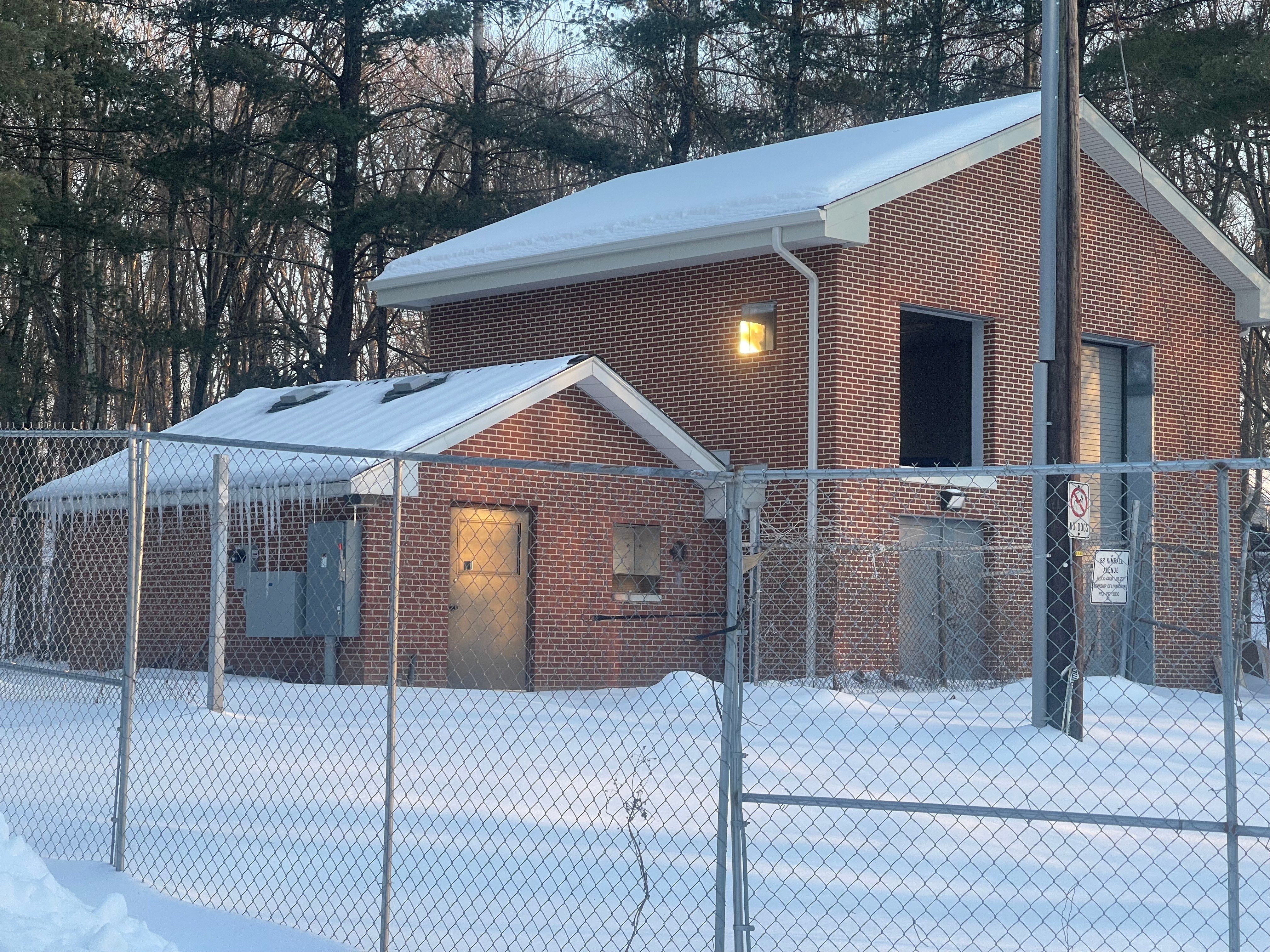
Well 10, Livingston, NJ – temporarily closed in 2021 due to excessive PFAS
To make matters worse, the action of Livingston's many local water wells themselves can create 'cones of depression', lowering the water table around the wells and contributing to the collection of contaminants from great distances.
Gold Standard, Dual-Technology Solution
At a cost of about $1,000 per resident, Livingston is employing a dual-technology approach, which is considered by many to be the gold standard for PFAS removal at the municipality level.
- Granular Activated Carbon (GAC): Water passes through large vessels filled with porous carbon. PFAS molecules “stick” to the carbon surface (adsorption), effectively removing them from the stream.
- Ion Exchange (AIX) Resins: These are specialized “magnets” (anion exchange) that specifically attract and bind PFAS chemicals. This technology is often more effective at capturing “short-chain” PFAS that GAC might miss.
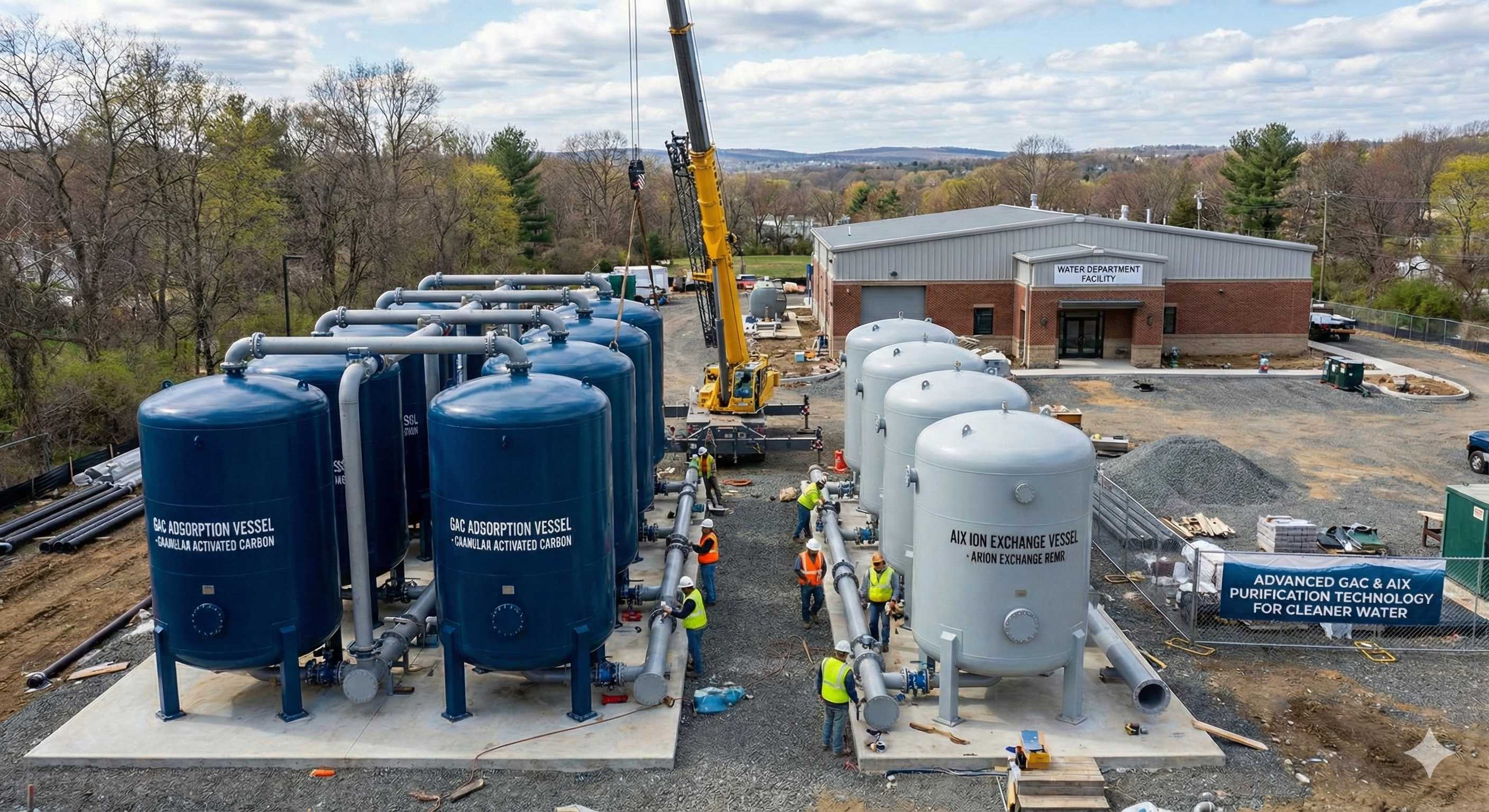
Depiction of Advanced GAC & AIX Water Purification Plant
Although most of us have been unknowingly drinking water that was far from ideal for decades, the future looks brighter for tap water. The township's current upgrades and your own properly certified home water filter, should inspire a certain level of confidence in the healthfulness of your tap water. And it's not only about human health. It's also about earth's health. There's no Planet B. Water delivered directly to your tap is a highly eco-friendly method compared to purchasing water in plastic bottles.
How We Grade Water Quality
To better understand our grading system, think of H2O, or water, as nature’s masterpiece. Marking it up, or adding contaminants, generally diminishes its quality. Purer water or at least within all EPA limits will result in a good grade. Note that there are a few exceptions to the “less is more” rule. Fluoride, in the right quantity, can contribute to long term dental health, especially in children. Calcium, magnesium and potassium are also important nutrients. Note that these nutrients can also be obtained with a balanced diet or in the case of fluorine, by using fluoridated toothpaste.
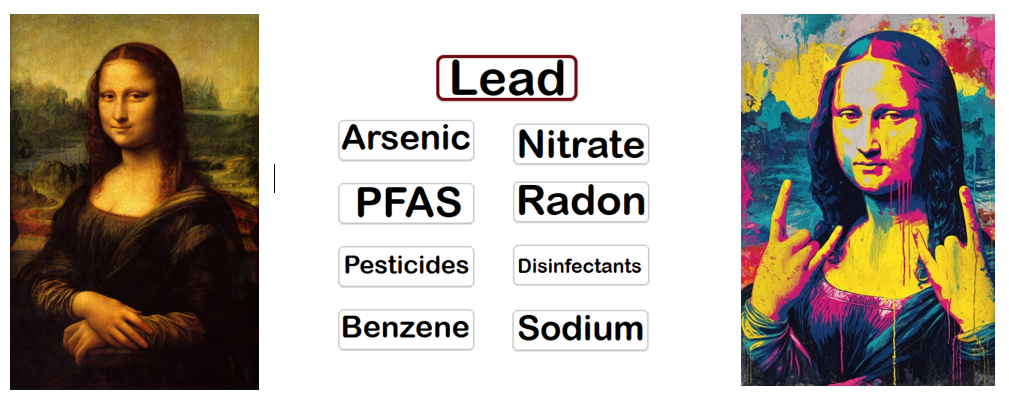
The more toxic the contaminant, in greater quantity, the lower the grade. Multiple contaminants further affect the grade. For instance, water containing both lead and arsenic would result in a worse grade than having either, individually.
Our grading system evaluates water quality based on the presence and levels of multiple contaminants. We use stricter, future EPA limits where applicable, because we believe in holding water quality to the highest standards.
How Does Livingston Compare to Nearby Towns?
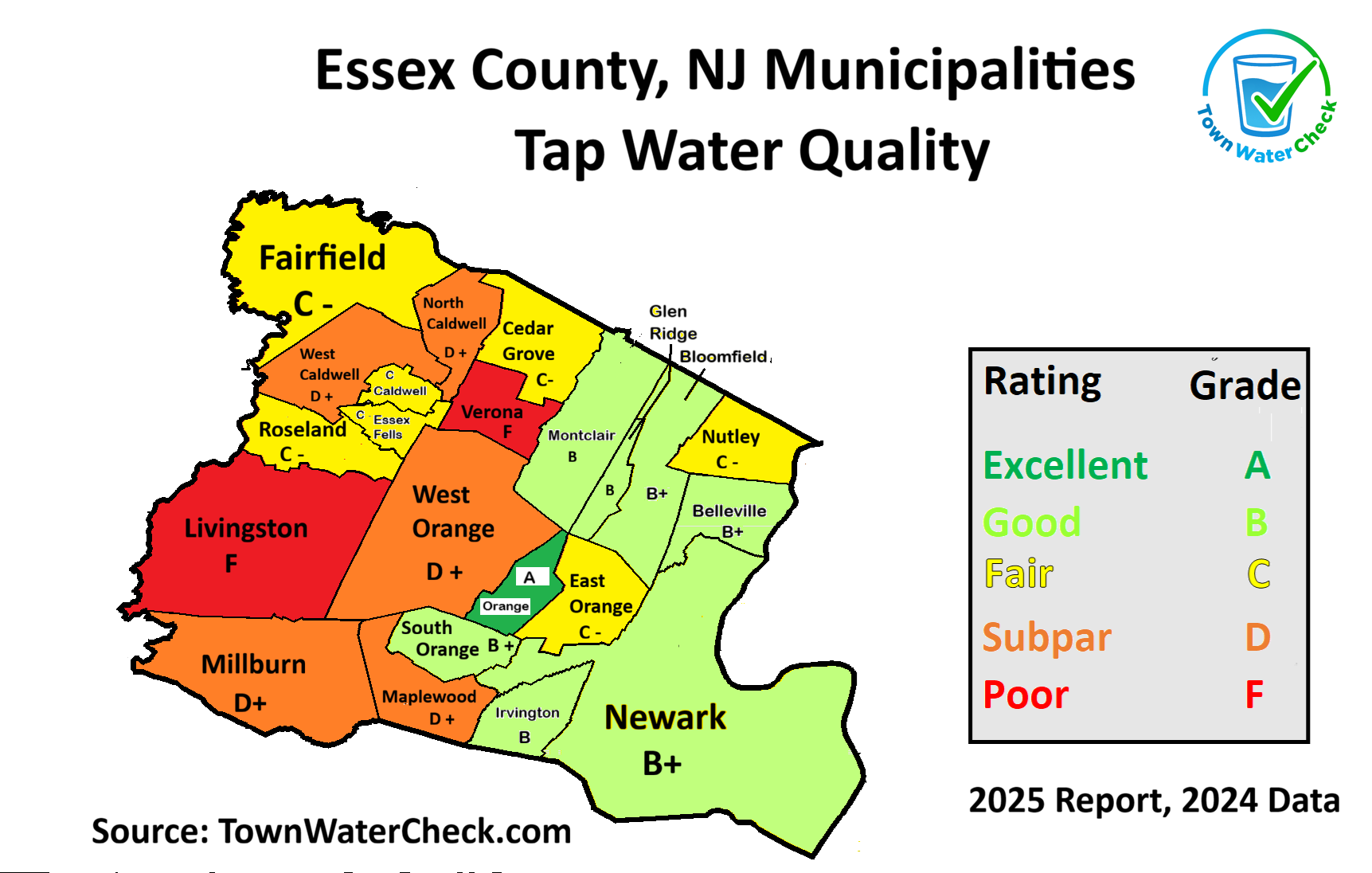
The F, Poor rating is the worst in the local area. Nearby Orange, New Jersey with no detectable lead, arsenic or forever chemicals, was the only local municipality to rate excellent. Remember, we are rating the current state of Livingston's tap water, not the way the township is responding to the issue. We believe that we will see much better results in the years to come.
What Can You Do? Filter Your Water
Given Livingston's water quality concerns, we strongly recommend using a home filter system such as a reverse osmosis (RO) type filter with a NSF/ANSI 58 standard. Alternatively, some Carbon Block filters with an NSF/ANSI 53 rating may also be effective. Just ensure they are certified to remove your particular water contaminants, especially lead and arsenic. If you would like to find out more about these filters, please visit: www.townwatercheck.com/water-filter-selection

Final Thoughts
Once the new water purification infrastructure is running, we would like to know Livingston's intentions regarding disposal of the PFAS waste. After all, the filters merely remove PFAS, but don't destroy them. Landfills eventually leak and ordinary incinerators are insufficiently hot to break apart PFAS chemical bonds and merely aerate them, creating a problem elsewhere. Many are the benefits of modern technology, but heavy are the burdens.
We hope that our tap water information has proven helpful.
For the latest tap water information, check with your water provider or municipality. We make no claims, positive or negative, regarding water safety.
Sampled tap water data tends to be more conservative than the average glass of tap water, often citing the 9th worst of 10 samples.
Note: The Consumer Confidence Report does not indicate active water fluoridation in Livingston.
Town Water Check wishes you a healthy and informed life and a cleaner, more beautiful planet.
Disclaimer: This analysis is based on publicly available data from the 2024/2025 Consumer Confidence Reports (CCRs) provided by the municipality or water provider.
Nearby Municipalities
Compare Livingston's water quality with nearby communities: